
Slow credentialing quietly costs new and growing practices a fortune in delayed revenue. Here's the full process, realistic timelines, the CAQH details, the common delays, and how to keep a new provider from sitting idle.
Credentialing is the unglamorous, paperwork-heavy process that decides whether a provider can actually get paid by a payer, and it is one of the most expensive things to get wrong. A new physician who is seeing patients but is not yet enrolled with the major payers is generating charges that cannot be billed. Every week of delay is revenue that may never be recovered.
This is the complete practice guide to credentialing and payer enrollment: what the two actually mean, the full process step by step, realistic timelines, the role of CAQH, the delays that trip up almost everyone, the real revenue cost of moving slowly, and when it makes sense to hand it off.
Credentialing vs payer enrollment: not the same thing
These two terms get used interchangeably, but they are different steps, and confusing them is a common cause of delay.
- •Credentialing is the verification of a provider's qualifications: education, training, licensure, board certification, work history, and malpractice history. It is the background check that proves a provider is who they say they are and is qualified to practice.
- •Payer enrollment (also called provider enrollment) is the process of getting that verified provider into a specific payer's network so claims can be submitted and paid. You credential once per provider, but you enroll separately with every payer.
You generally have to be credentialed before you can be enrolled, and you have to be enrolled with each payer before you can bill that payer. A provider can be fully credentialed and still unable to collect a dollar from a given insurer until enrollment with that insurer is complete.
The credentialing process, step by step
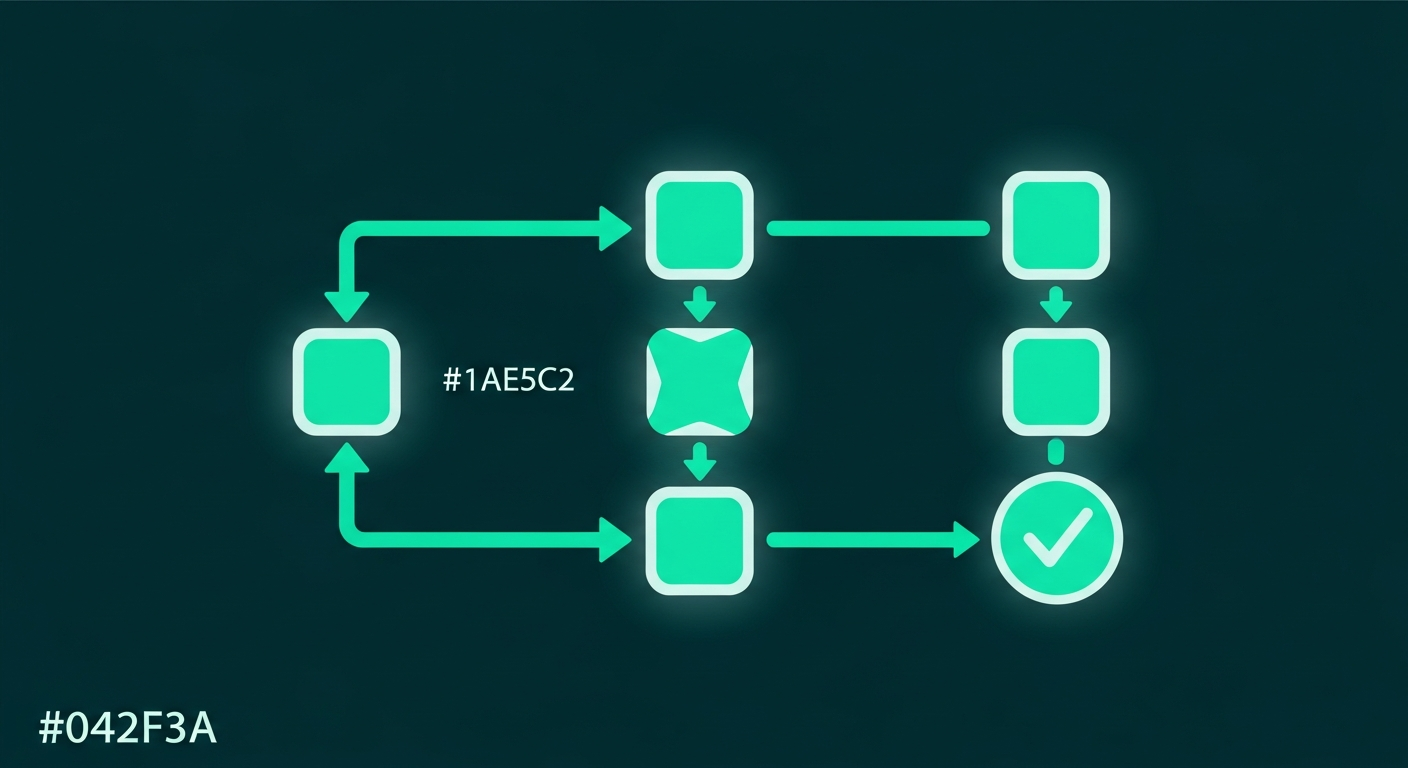
The process is not complicated so much as it is exacting. A single inconsistency can send an application back to the start of a multi-week queue. The core steps:
- 1.Gather the provider's complete data: licenses, DEA registration, board certifications, education and training history, work history with no gaps, malpractice insurance, and the NPI.
- 2.Build and maintain the CAQH profile, which most commercial payers pull from. Accuracy and attestation here drive everything downstream.
- 3.Verify the source data through primary source verification, confirming credentials directly with the issuing bodies.
- 4.Submit enrollment applications to each payer, commercial and government, following each payer's specific requirements and forms.
- 5.Respond fast to payer requests for additional information, which is where most preventable delay happens.
- 6.Track each application to approval and capture the effective date and provider ID for billing.
The detail that catches practices off guard is that this is per provider, per payer, and it never fully ends. Recredentialing comes around on a cycle, typically every couple of years, and a lapse can suspend a provider's ability to bill a payer overnight.
Realistic timelines: plan for months, not weeks
Here is the number that surprises every new practice: payer enrollment commonly takes 90 to 120 days per payer, and sometimes longer for slower payers or government programs. Credentialing the provider can be done in a few weeks if the data is clean, but the enrollment queue at each payer is the long pole.
The practical implication is that you must start credentialing the moment you know a provider is joining, ideally three to four months before their start date. Waiting until they arrive guarantees weeks or months of seeing patients whose visits cannot be billed to the major payers.
CAQH: the profile that drives everything
Most commercial payers pull provider data from CAQH ProView rather than re-collecting it, which makes the CAQH profile the backbone of commercial enrollment. If the CAQH profile is incomplete, out of date, or not attested, enrollment stalls no matter how good the rest of your paperwork is.
- •Keep every field complete and consistent with your other documents, especially work history dates and the absence of unexplained gaps.
- •Re-attest on schedule. CAQH requires periodic attestation, and a lapsed attestation can quietly freeze enrollment.
- •Keep documents current: license, DEA, malpractice coverage, and board certifications all expire and must be refreshed in the profile.
- •Make sure the profile is set to allow the payers you are enrolling with to access it.
The delays that trip up almost everyone
Most credentialing delay is self-inflicted and preventable. The usual culprits:
- •Incomplete or inconsistent applications, especially work-history gaps that are not explained.
- •Expired documents: a license, DEA, or malpractice policy that lapses mid-process resets the clock.
- •Slow responses to payer requests for more information, which send the application to the back of the queue.
- •Starting too late, so the provider's start date arrives before enrollment is anywhere near done.
- •Losing track of applications across many payers, so a stalled one sits unnoticed for weeks.
- •Missing a recredentialing deadline, which can suspend billing for an already-active provider.
None of these are hard to avoid individually. The challenge is that across several providers and a dozen payers each, the sheer volume of moving parts makes it easy for one to slip, and a single slip can mean months of delay.
The real revenue cost of slow credentialing
This is where credentialing stops being paperwork and becomes a financial issue. Imagine a new provider who could generate a meaningful book of charges each month but is not yet enrolled with the major payers. Those visits either cannot be billed at all or pile up as held claims hoping for a retroactive effective date that may not come. Every month of delay is a month of that provider's revenue at risk.
Across a few providers, slow credentialing can cost a practice tens of thousands of dollars in delayed or permanently lost revenue. Because credentialing sits at the very front of the revenue cycle, getting it wrong undermines everything downstream, which is why it belongs in any serious conversation about revenue cycle management rather than being treated as an afterthought.
Tips to keep credentialing on track
Whether you handle it in-house or hand it off, these practices keep credentialing from becoming a bottleneck:
- 1.Start early, always. Build credentialing into your hiring timeline, not your onboarding checklist.
- 2.Keep a master document set per provider, updated as licenses and certifications renew.
- 3.Maintain CAQH proactively, with attestation reminders well ahead of deadlines.
- 4.Track every application in one place with status and follow-up dates, so nothing stalls silently.
- 5.Calendar recredentialing dates years in advance so an active provider never lapses.
- 6.Capture and store each payer effective date and provider ID so billing can start the day enrollment completes.
When to outsource credentialing
Credentialing is a strong candidate for outsourcing precisely because it is high-stakes, detail-intensive, and only occasional for a small practice. An in-house team that credentials a provider once or twice a year never builds the muscle memory that a dedicated team has from doing it constantly across many payers.
Consider handing it off when you are onboarding providers regularly, expanding to new payers or locations, or simply finding that credentialing keeps falling to the bottom of someone's overloaded list. A team that lives in payer portals and CAQH every day will move applications faster and let fewer of them stall. This is exactly why credentialing is part of how our medical billing and revenue cycle teams get a new provider earning as quickly as the payers allow.
The bottom line
Credentialing and payer enrollment are the gate every provider's revenue has to pass through, and the timelines are largely out of your hands. The levers you do control are starting early, keeping CAQH and documents clean, tracking every application so none stall, and never missing a recredentialing deadline. Treat credentialing as a revenue function, not just paperwork, and a new provider starts earning as fast as the payers will allow.
If you want credentialing handled by a team that does it every day and gets your providers enrolled and billing faster, that is part of what Carevonix delivers.