
Automate the rules-based work, keep the judgment work human. Here is a plain guide to revenue cycle automation that actually lifts collections without breaking your patient experience.
Every revenue cycle vendor pitch in 2026 leads with automation. AI eligibility, robotic claim status, intelligent denial routing, predictive patient payment scoring. The pitches sound interchangeable, and most of them quietly oversell what the technology actually does. The result is practices that either buy too much and end up with brittle workflows nobody trusts, or buy too little and stay stuck doing rules-based work by hand.
The right answer is almost never all or nothing. The revenue cycle is full of work that should be automated yesterday, full of work that absolutely should not be, and a middle layer where a person and a bot working together produces results neither could on their own. This guide breaks down where each piece belongs, where automation actually pays off, and what to leave to a human with judgment and a payer rep on the phone.
What revenue cycle automation actually means
Most automation in the revenue cycle is not artificial intelligence in the science-fiction sense. It is software doing repetitive, rules-based work that humans used to do by clicking through portals. Eligibility checks against a payer API, claim status pulls, ERA posting, denial reason categorization, statement runs, and patient text reminders are all examples. They are valuable because they are fast, cheap, and never get tired, not because they are smart.
Real machine learning shows up in narrower spots: predicting which claims are likely to deny, scoring which patient balances will pay, routing denials to the right work queue, or flagging coding patterns that look risky. These models help when they are tuned for your payer mix and your specialty. They are not a substitute for a clinician who knows what the chart actually says.
The mental model that holds up is simple. Automation is excellent at volume and rules. Humans are excellent at judgment and exceptions. The strongest revenue cycle programs use each for what it is best at and design the handoff carefully. For a wider view of where the whole cycle breaks down without that discipline, our piece on common revenue cycle management mistakes covers the patterns that show up over and over.
Automate this: high-volume, rules-based work
If a task happens hundreds or thousands of times a month, has a clear rule set, and the consequences of an error are recoverable, it belongs in software. Doing this work by hand is not just slow, it is also where most data entry errors creep in.
- •Insurance eligibility and benefits verification, ideally 48 to 72 hours before the visit, with a same-day recheck on the morning of the appointment.
- •Real-time claim status pulls from payer portals so a human only sees claims that need action, not claims that are progressing normally.
- •ERA posting and contractual adjustment write-offs when the payment matches the expected allowable.
- •Denial categorization by CARC and RARC code so the right denials route to the right work queue automatically.
- •Patient statement runs, payment plan reminders, and balance text or email nudges on a defined cadence.
- •Appointment reminders, intake form delivery, and copay collection prompts before the visit.
- •Routine reporting: clean claim rate, denial rate, days in AR, net collection rate, refreshed on a schedule rather than built by hand.
These are the wins that pay for themselves fast. A practice that automates eligibility alone usually prevents a meaningful chunk of denials in the first 60 days, because most preventable denials trace back to a coverage problem that was knowable before the visit. Automation here is not a luxury, it is hygiene.
Keep this human: judgment, context, and relationships
On the other side of the line is work where automation either fails outright or causes damage that costs more than the labor it saved. These are tasks that require reading context, applying clinical or contract judgment, or talking to another human who needs to be persuaded.
- •Complex denial appeals that need a written argument referencing chart notes, medical necessity language, or payer policy.
- •Underpayment disputes that require reading the contract, comparing it to the EOB line by line, and escalating to provider relations.
- •Prior authorizations for non-routine procedures where peer-to-peer review is likely.
- •Coding decisions that hinge on documentation nuance, modifier choice, or unbundling rules.
- •Sensitive patient financial conversations: hardship requests, payment plans for large balances, billing complaints.
- •Credentialing and payer enrollment escalations when an application stalls inside a payer for weeks.
The mistake here is using automation as a substitute for a person who can think. A bot can flag an appeal opportunity. It cannot read the note, find the magic phrase that supports medical necessity, and write a one-page letter that gets the claim paid. The best programs let automation do the triage and let an experienced biller do the persuasion.
The patient conversation is not a workflow
Patient AR deserves a special note. Texts and emails on a sequence are fine and should be automated. But the call that comes back, the family in financial hardship, the patient who is confused about coordination of benefits, all of that has to be handled by a person who can listen. Outsourcing those calls to a script-only chatbot is one of the fastest ways to lose patients in 2026.
The hybrid model that wins
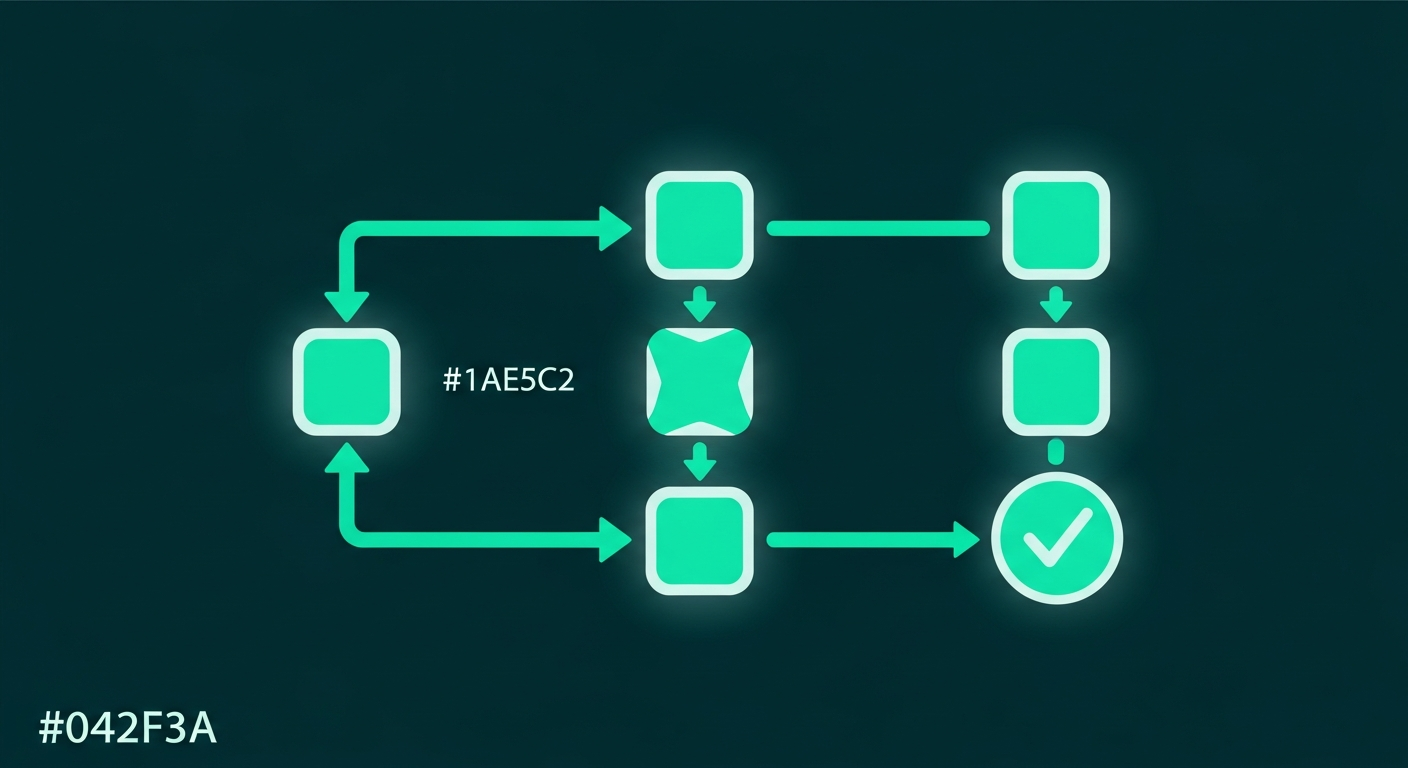
Most of the revenue cycle is not pure automation or pure human work. It is a handoff. Software does the screening and the routine motions, and a person steps in at the exception. The win comes from designing the handoff well so neither side is doing the other's job.
- 1.Automation runs eligibility, posts ERAs, pulls claim status, and categorizes denials by CARC and RARC code on a daily cadence.
- 2.A predictive model or simple rules engine flags the work that needs a human, ranked by dollar value and likely yield.
- 3.Billers and AR analysts spend their day on the flagged queue, not on rote portal clicks, so their hours are spent where they actually move money.
- 4.Outcomes feed back into the model: which appeals got paid, which underpayments recovered, which payers changed behavior, so the routing gets smarter over time.
Done right, the same headcount works more accounts, denials get answered while the paper trail is fresh, and the team stops burning out on busywork. That is the real promise of automation, and it is also what a competent revenue cycle management team should deliver out of the box rather than asking you to buy and integrate it yourself.
Common automation mistakes to avoid
Automation goes wrong in predictable ways. Most failed rollouts share the same root causes, and they are easy to avoid once you have seen them a few times.
Automating a broken process
If your eligibility process is confused, automating it produces confused results faster. Fix the workflow first, document the rules, then let software run them. Otherwise you have spent money to scale up the same errors.
Treating the bot as the owner
Every automated step still needs a human owner who watches its output and acts when something looks off. Without an owner, an eligibility tool can quietly stop pulling responses for a payer and nobody notices for weeks until denials start spiking.
Buying point solutions that do not talk to each other
Stacking five vendors, each automating one slice of the cycle, often creates more reconciliation work than it removes. Either choose a platform that handles the full chain, or insist on clean integrations into your EHR and PM system so the data does not split into silos.
Confusing reporting with insight
Automated dashboards make it easy to mistake more charts for more understanding. A weekly review that asks the right questions about three or four metrics will beat a dashboard nobody opens. Pair every automated report with a recurring human review.
A practical checklist before your next automation project
Use this short checklist before you sign for any automation tool or expand an existing one. It will save you a year of cleanup work.
- 1.Document the current process step by step, including who does what today and how long it takes.
- 2.Identify the volume: how many times does this task happen per month, and how much labor does it consume.
- 3.Define the rules clearly. If you cannot write the rule on one page, the task is not yet ready for automation.
- 4.Pick the metric that proves the tool worked: denial reduction, days in AR, payment posting accuracy, or patient pay rate.
- 5.Name the human owner and the escalation path before go-live, not after.
- 6.Pilot on one payer or one specialty for 30 to 60 days and compare to a baseline.
- 7.Decide how the tool integrates with your EHR, PM, and clearinghouse. If integration is fragile, the gain is too.
- 8.Plan the audit: how often a human will spot-check the output to catch silent failures.
- 9.Set the kill criteria. If the tool misses the metric after a fair pilot, you turn it off rather than absorb the workaround.
Practices that work this list end up with a small number of automations they actually trust, instead of a long list of half-used licenses. For more on how this fits with broader medical billing services, the same discipline applies whether the work runs in-house or with a partner.
The bottom line
Revenue cycle automation is not a product you buy. It is a design decision you make over and over: which work belongs in software, which work belongs with a person, and how the two hand off. Get that design right and the same team collects more money in fewer hours with fewer mistakes. Get it wrong and you have new tools running on top of the same broken workflows.
If you want a revenue cycle that uses automation where it pays and keeps experienced humans on the work that needs judgment, that is exactly how Carevonix runs the cycle end to end.